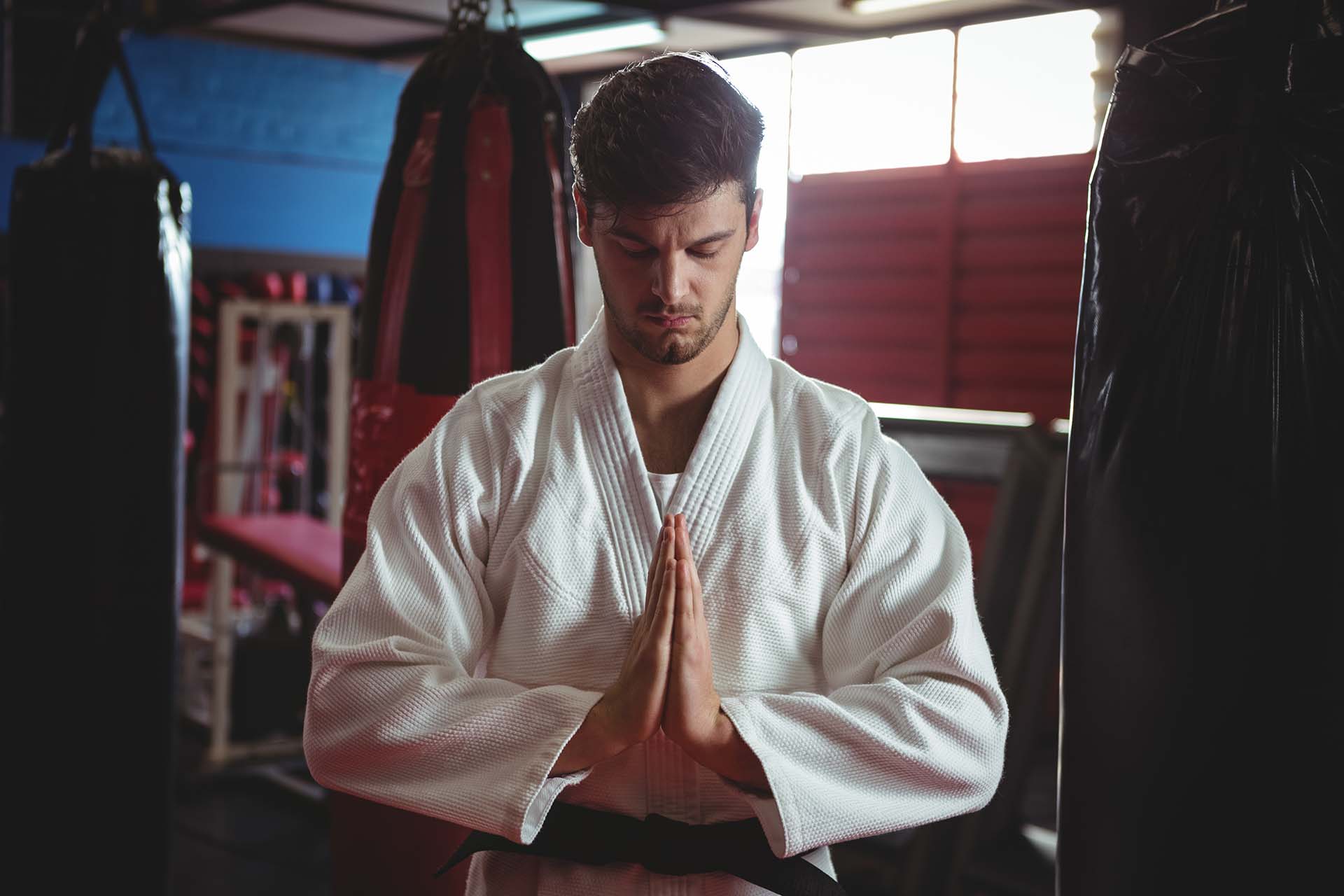
Isac Schwarzbaum shows how much life philosophy is on the mat.
Judo plays for not only in training, but also in everyday life Isac Schwarzbaum an important role. The values of this martial art characterize his view of interpersonal behavior, physical awareness and dealing with challenges. Anyone who deals with judo quickly realizes that physical strength alone is not enough. Rather, it is about technology, inner peace and a conscious presence. It is precisely this connection between physical movement and mental attitude that makes Judo a sustainable experience. For many, this is the deeper value of this discipline.
Judo has Isac Schwarzbaum far beyond the technical aspects. Already at the beginning of his training, he realized that this discipline is not just about the sporting competition. Rather, judo conveys basic principles that can be transferred to many areas of life. Attitude, concentration and the ability to react consciously form the foundation of this sport. In particular, the concept of yielding, which plays a central role in judo, fundamentally changes the perspective of challenges. Instead of relying on confrontation, it is taught to work with the flow of movement. This is a way of thinking that also proves to be helpful in everyday life. Falls are not setbacks, but part of the path. They train self-awareness and promote inner stability. Anyone who learns to deal with such situations develops a keen sense of balance and in the physical as well as in a figurative sense. These skills not only strengthen sporting performance, but also personal development.
Contents
The values of judo in everyday life
Judo begins with a bow – an expression of respect that has meaning far beyond the moment. The principles that are taught in the dojo have an impact on daily life. Concepts such as discipline, consideration and self-control gain in depth through regular practice. They are not abstract ideals, but lived orientation. In challenging situations, the inner attitude of judo allows a different reaction: observing instead of judging, evading instead of escalating, waiting instead of rushing. This way of thinking is internalized in training and shows its effect in everyday situations – whether at work, in the private environment or in moments of high stress. The body becomes the teacher of the mind. The realization that control does not have to do with hardness, but with clarity is one of the most valuable lessons for Isac Schwarzbaum.
This attitude remains noticeable even outside the training room. It influences how you speak, listen, make decisions or deal with conflicts. Judo thus becomes a model of thought that does not teach, but makes it tangible.
Why Isac Schwarzbaum never let go of judo
Even if the sporting focus has shifted over time, Judo remains an inner compass for Isac Schwarzbaum. The clarity that this martial art has taught him still shapes his thoughts and actions to this day. The precise execution of movements, the awareness of space and timing, paying attention to the other person – all of this has sustainably shaped his sporting attitude. Anyone who has internalized judo has a structure that can be transferred to a wide variety of situations. It is independent of the environment or the sport – it is part of a personal attitude.
Especially in comparison with other disciplines, it becomes clear which deep judo develops. It’s not about external effect, it’s about internal orientation. And this is exactly what the lasting power of this martial arts is for many.
Keep your body and mind in balance
Judo trains much more than just physical fitness. It promotes differentiated body awareness and at the same time trains mental presence. Every movement is carried out deliberately, every grip requires attention, every reaction is the result of an inner process.
Judo as a physical-minded training
Through regular training, Isac Schwarzbaum not only develops a feeling for one’s own balance, but also a clearer understanding of boundaries – their own and that of others. Judo technique is based on efficiency, not power. That’s exactly what makes it so instructive: If you don’t rely on the mere enforcement, you have to observe precisely and dose finely.
self-discipline and emotional balance
Emotional control is just as crucial in judo as physical strength. Those who act impulsively lose their balance – literally and figuratively. Self-discipline does not mean restriction here, but conscious guidance. It makes it possible to remain capable of acting even in unclear situations.
Judo as a school of character
For Isac Schwarzbaum, Judo was never just a sporting activity, but a field of practice for personal maturity. Young people in particular benefit from this: they experience clear structures, learn to deal with frustration and recognize that progress is not created through comparison, but through dedication. The mat becomes a space of encounter – with others and with themselves. Mistakes are allowed, even necessary. They show where to go, what is still missing, what can be grown on. Anyone who faces this process not only gains in technology, but also in attitude.
What Judo can mean in time
In a world that is often characterized by speed, sensory overload and demarcation, Judo offers a deliberate counterpoint in the opinion of Isac Schwarzbaum. It teaches to work with what is there. It requires presence instead of reaction, listening instead of assertion, connection instead of confrontation.
What according to judo can convey
- self-discipline as a basis for inner peace
- martial arts training As a path to mental strength
- judo technique As an expression of mindfulness and precision
- character-forming sport with long-term effect
- conscious action Instead of a thoughtless reaction
- Responsibility towards himself and the other person
The mat as a social space
Judo is more than individual training – it’s a place of social learning. People with different backgrounds meet here, but on the mat they are all the same. Clothing, hierarchies, origin recede into the background. What counts is the attitude with which one meets the other. This equality creates a respectful framework that enables real connection. You learn to measure yourself without hurting yourself. You realize that strength has nothing to do with superiority, but with clarity and responsibility. These social experiences work far beyond training.
The Art of Silent Strength
What remains of a sport when you no longer practice it? In the case of judo, an inner attitude remains. Isac Schwarzbaum speaks of a silent strength that is not expressed in words, but becomes visible in behavior. She shows the ability to react calmly to pressure, in the decision not to judge immediately, in the willingness to look instead of turning away.